 Gormox
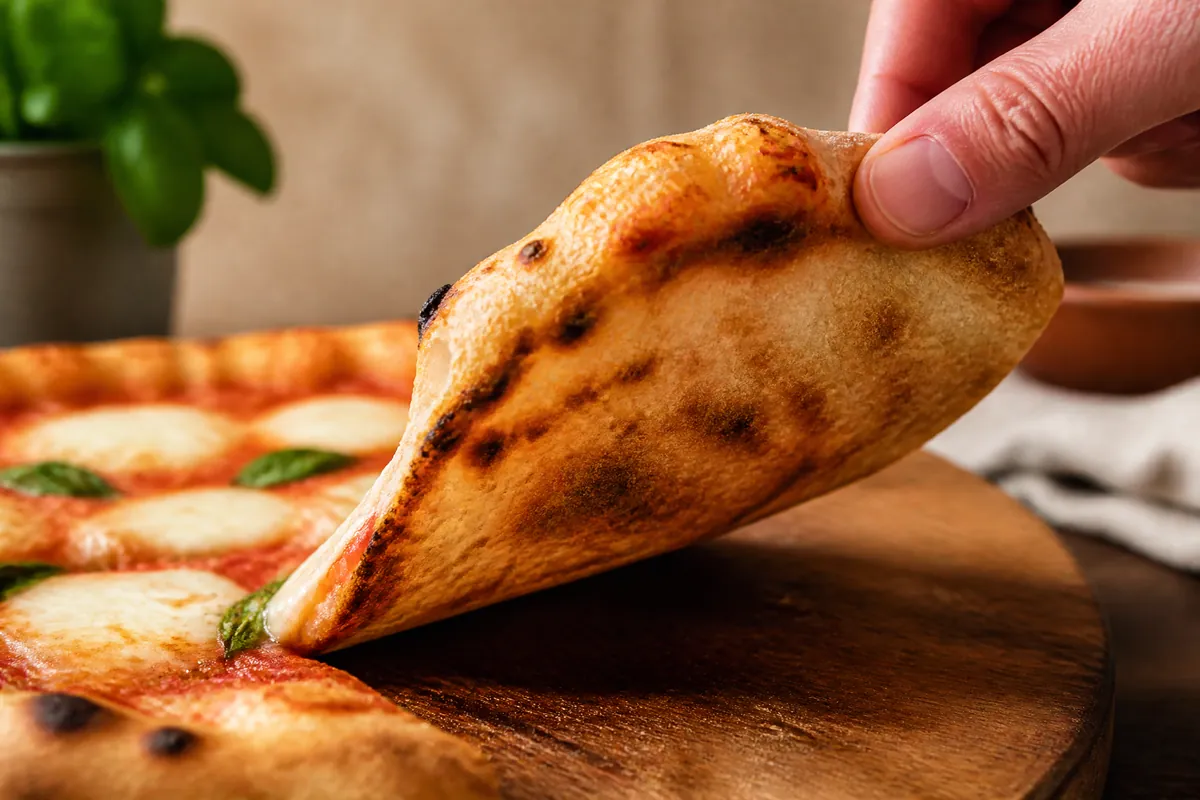
A crisp base from a countertop pizza maker
A clamshell pizza maker heats from above and below at once, which is exactly what a crisp base needs. When the base comes out soft anyway, the cause is almost always water, thickness or impatience.
19 September 2026
Why a base goes soft
Dough crisps when the water near its surface boils off quickly. Anything that adds water or slows the heat down works against that: wet mozzarella, a thick layer of sauce, vegetables that release juice as they cook, or a base so thick that the middle is still steaming when the top is done.
Roll it thinner than you think
Aim for about 3 to 4 mm in the middle, with a slightly thicker rim. On a 30 cm plate, a round of 27 to 28 cm leaves a small gap so the edge does not press against the rim of the lid. Let the dough come up to room temperature first; cold dough is stiff, springs back and cooks unevenly.
A light dusting of semolina or flour on the underside helps the base slide on and off the plate and adds a little crunch.
Let it get fully hot first
The PizzaMaker reaches 220 °C in a few minutes, but only once it is there does the base start to crisp the moment it touches the plate. Wait for the ready signal described in the manual before the dough goes in, and give it a minute or two between pizzas to recover its heat.
Keep the toppings dry
- Tear fresh mozzarella and leave it on kitchen paper for ten minutes, or use a drier low-moisture mozzarella.
- Use two or three tablespoons of sauce for a 28 cm base, spread thinly.
- Cook mushrooms, courgettes and onions briefly in a pan first, so they give up their water there instead of on the pizza.
- Add fresh basil, rocket and cured ham after cooking, not before.
Leave the lid alone
Every time the lid opens, the heat that was browning the top escapes. Close it and wait. With a thin base, start checking after about six minutes; thicker dough and heavier toppings take longer. Every dough behaves a little differently, so treat this as a starting point and follow the manual.
Give it a minute to breathe
A pizza put straight onto a solid plate traps steam underneath and softens the base you have just crisped. Slide it onto a wire rack or a wooden board for a minute before cutting.
| What you see | Likely cause | What to change |
|---|---|---|
| Pale, soft base, cooked top | Plate not fully hot, or base too thick | Wait for the ready signal; roll thinner |
| Soggy centre only | Too much sauce or wet cheese in the middle | Less sauce; drain the mozzarella |
| Burnt rim, raw middle | Dough uneven, thick in the centre | Stretch from the centre outwards |
| Base soft after cutting | Steam trapped under the pizza | Rest it on a rack for a minute |
Not only pizza
The same heat from both sides turns out flatbreads, garlic bread, quesadillas and toasted panini. Flatbreads in particular are quick, because there is no topping to hold back the heat.
Want the machine itself? The PizzaMaker Pro 12 is €89.99, delivered free, paid by card at the checkout or in cash at the door.